
How to Replace a Shower Pump: DIY Steps & When to Call a Plumber
- Office Admin
- October 16, 2024
A faulty shower pump can lead to poor water pressure, loud noises, or a shower that stops working altogether. While replacing a shower pump is possible for experienced DIY homeowners, it isn’t always necessary. In many cases, the problem could be caused by an airlock, blocked filter, faulty flow switch or worn flexible hose.
This guide explains how to replace a shower pump safely, the tools you’ll need, common mistakes to avoid, typical replacement costs in Dublin, and when it’s better to call a professional plumber. Whether you’re replacing a Stuart Turner, Salamander, Grundfos or another shower pump, the steps below will help you understand the process.
Shower pump replacement involves removing a faulty or noisy unit and installing a new pump to restore proper water pressure. Professional replacement costs vary depending on pump type and pipework layout.
Replacing a shower pump usually takes 2–4 hours for a qualified plumber. While some experienced DIY homeowners may attempt it, the job involves plumbing connections and electrical isolation, so professional installation is often recommended to ensure safety and protect the manufacturer’s warranty.
Below, we explain how shower pump replacement is done step by step — and when it may be safer to call a professional.
If your existing pump has failed completely, our Shower Pump Replacement Dublin service can supply and install a suitable replacement across Dublin.
How Do You Know Your Shower Pump Needs Replacing?
Many shower pump problems can be repaired without replacing the whole unit.
Signs your shower pump may need replacement include:
✔ Pump won’t start
✔ Pump runs continuously
✔ Loud grinding or rattling noise
✔ Burning smell
✔ Water pressure keeps dropping
✔ Frequent electrical trips
✔ Water leaking from the motor housing
If your pump is only making occasional noise or losing pressure, it could simply have an airlock or blocked inlet filter.
Can a Shower Pump Be Repaired Instead of Replaced?
Many homeowners assume a faulty shower pump must be replaced immediately, but this isn’t always the case. Certain faults can often be repaired without replacing the entire unit.
Common repairable faults include:
- Blocked inlet filters
- Faulty flow switches
- Worn capacitors
- Airlocks in the system
- Damaged flexible hoses
- Non-return valve problems
However, if the motor has seized, the bearings have worn out, or water has entered the electrical components, replacing the shower pump is usually the safest and most cost-effective option.
A professional inspection can quickly determine whether a repair or replacement is the better investment.
When You DON'T Need to Replace the Pump
A complete replacement isn’t always the answer.
In our experience, many pumps can be repaired by replacing inexpensive parts such as:
- Flow switch
- Capacitor
- Flexible hoses
- Inlet filters
- Non-return valves
If the motor has seized, bearings have failed or water has entered the electrical components, replacing the entire pump is usually the safest long-term solution.
Tools You'll Need
- Adjustable spanner
- PTFE tape
- Screwdrivers
- Towels
- Bucket
- Voltage tester
- Isolation valve key (if fitted)
- Spirit level
- Torch for attic installations
Step 1: Turn Off the Water and Power
Safety first!
Switch off the power to the shower pump. If you are unsure of the power supply location, it is usually connected to a fused spur near the pump or the main circuit breaker.
Next, turn off the water supply to the shower pump. If isolation valves are installed, then turn off both hot and cold water lines. If you are unsure about the supply lines, then you need to shut off your home’s main water supply.
If you’re unsure at any stage, it’s best to consult a qualified plumber.
Professional Tip
- Always isolate the electrical supply before touching any pipework.
- Never rely solely on switching the shower off at the bathroom switch.
- Many pumps are connected through a fused spur located outside the bathroom.
Step 2: Drain the Water System
Before disconnecting anything, drain out any remaining water from the pipes to avoid a mess. Turn on the nearby faucet to release the water pressure and drain out the remaining water. Keep towels or a bucket to collect any extra drips.
Step 3: Disconnect the Old Pump
Before removing the pump, take a photo of the pipe connections and electrical wiring.
This makes installation much easier if you need to reconnect the new unit in the same orientation.
It is time to remove the old pump. Using an adjustable spanner or wrench, loosen the nuts connected to the pipes. Keep the towels nearby, bit of water may spill out when you do this.
Once the pump is disconnected, unscrew any bolts or screws securing it in place. Gently remove the old pump and keep it aside for safe disposal.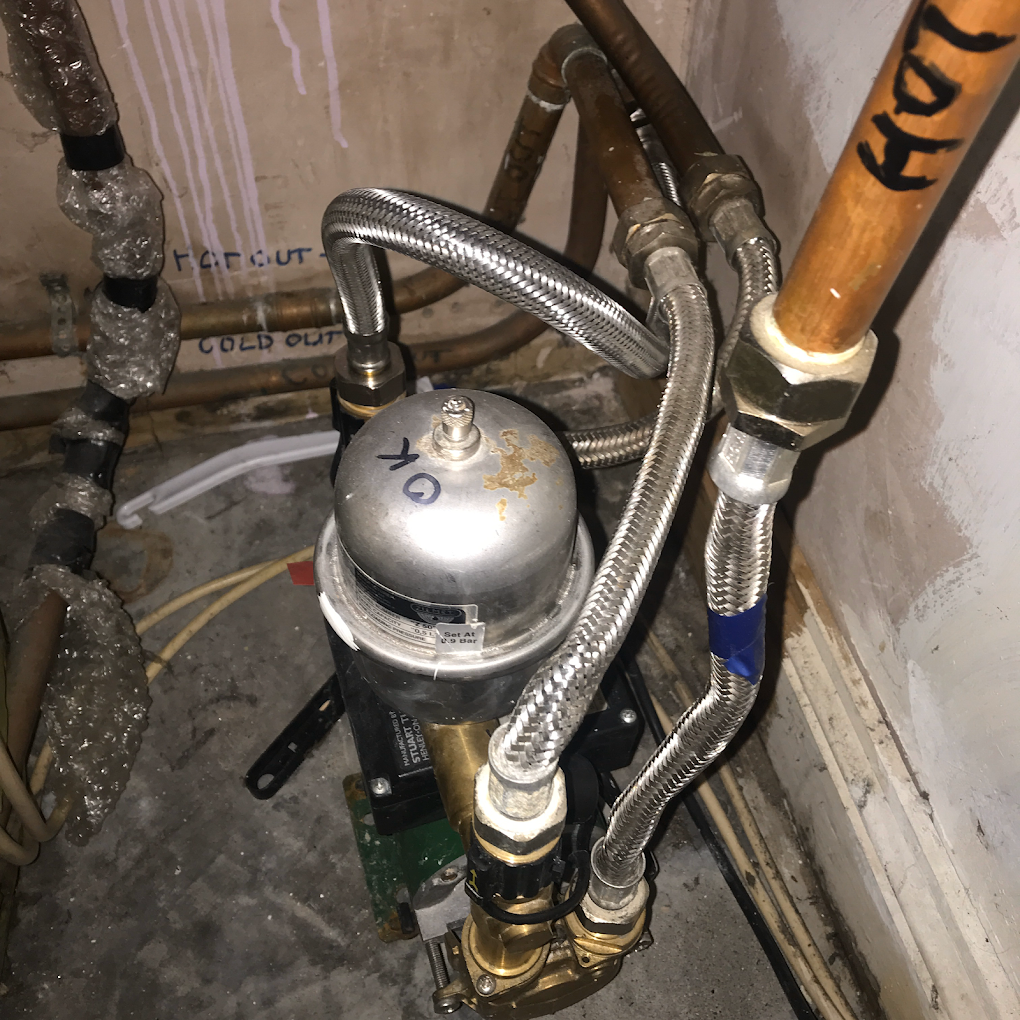
Step 4: Prepare the New Pump
Before installing the new pump, check the instructions provided by the manufacturer. All pumps are not the same, so double-check any specific installation steps for your model.
Wrap the threads on the pipe connections with the PTFE tape to create a watertight seal. It will reduce the chance of leaks.
Step 5: Install the New Pump
Carefully position the new pump in the correct mounting location. Align the inlet and outlet pipes with the existing system. Once you are positioned properly tighten the nuts and secure the connections using the spanners. Overtighten may damage the connections, so tight enough to prevent leaks.
Before tightening the flexible hoses
Ensure:
✓ Flow arrows point in the correct direction
✓ Pump is level
✓ Anti-vibration feet are installed
✓ Flexible hoses are not twisted
Improper alignment is one of the most common reasons for noisy installations.
Priming the Pump Before First Use
Some shower pumps need to be primed before they can operate correctly.
Follow the manufacturer’s instructions to remove trapped air from the system before switching the pump on.
Running a shower pump without water can damage the internal seals and reduce its lifespan.
Looking for professional installation? Learn more about our Shower Pump Installation Dublin service
Step 6: Double-Check Everything
Before turning on the water and power supply, check everything to make sure of safety.
- Check all connections are tight
- Check PTFE tape is applied to all pipe threads
- Check the pump is securely mounted.
Step 7: Turn the Water and Power Back On
Now, it’s time for your excitement. Turn the water supply back on, check for leaks, then restore power. Test the shower to confirm the pump is running smoothly.
Once the pump is powered up, turn on your shower and enjoy the improved water pressure!
Step 8: Test the System
Let the pump run for a few minutes to make sure it is working properly. Listen for any unusual noises. If everything is running smoothly, congratulations. You’ve successfully replaced your shower pump!
Troubleshooting After Replacing a Shower Pump
Problem |
Possible Cause |
Solution |
|---|---|---|
Pump won't start
|
No electrical supply
|
Check fuse and fused spur
|
Pump runs but no water
|
Airlock
|
Prime the pump
|
Pump is noisy
|
Air trapped
|
Bleed the system
|
Poor pressure
|
Wrong pump selected
|
Check pump specification
|
Water leaks
|
Loose fitting
|
Tighten or replace washer
|
Pump cycles repeatedly
|
Faulty flow switch
|
Replace switch
|
How Long Does a Shower Pump Last?
A quality shower pump typically lasts between 8 and 15 years depending on:
- Installation quality
- Water quality
- Frequency of use
- Maintenance
- Pump brand
Well-maintained Stuart Turner and Salamander pumps often last well over ten years.
Choosing the Correct Replacement Shower Pump
Not all shower pumps are interchangeable.
Before purchasing a replacement, check:
- Whether your system requires a positive head or negative head pump.
- The pressure rating required for your shower.
- The number of outlets the pump will supply.
- Pipe connection sizes.
- Whether your home has a gravity-fed or mains pressure water system.
- The manufacturer’s installation requirements.
Installing an incompatible pump can lead to poor performance, excessive noise, airlocks, or premature failure.
If you’re unsure, it’s worth having your existing system assessed before buying a replacement.
Common Mistakes When Replacing a Shower Pump
Even confident DIY homeowners can run into problems. The most common issues we see include:
Installing the wrong type (positive vs negative head)
Not isolating electrical supply safely
Overtightening fittings and damaging threads
Failing to flush debris before connecting the new pump
Installing without anti-vibration support, causing noise
Incorrect installation can lead to leaks, airlocks, noise issues, or early pump failure. If you are unsure about compatibility or wiring, it is safer to consult a professional plumber.
DIY vs Professional Shower Pump Replacement
Option |
DIY |
Professional |
|---|---|---|
Cost
|
Lower
|
Higher
|
Warranty Protection
|
No
|
Yes
|
Electrical Safety
|
Risk
|
Safe
|
Installation Time
|
Variable
|
1–2 Hours
|
Tips for a Smooth Installation
Choose the right pump: Make sure your new pump matches your home’s water system (e.g., positive or negative head).
Install isolation valves: If your system doesn’t have them already install isolation valves during the replacement. They make future maintenance much easier.
Check the warranty: Keep your receipt and check the warranty on your new pump in case any issues arise later.
Prefer Professional Installation?
Shower pump replacement may look straightforward, but incorrect fitting can cause leaks, electrical issues, or premature failure.
If you prefer professional help, our experienced team can assist with shower pump replacement and installation. With over 24 years of experience, we ensure:
Correct pump selection (positive or negative head)
Safe electrical isolation
Leak-free connections
Quiet and vibration-free installation
Manufacturer warranty protection
If you prefer peace of mind, contact our team for a clear and competitive quote.
What Affects the Cost of Shower Pump Replacement?
The total cost depends on several factors:
- Pump brand
- Positive or negative head
- Pipework alterations
- Electrical modifications
- Pump location
- Flexible hose replacement
- Isolation valve installation
- Existing water system
Homes with difficult attic access or older plumbing may require additional work.
Can I Replace a Shower Pump Myself?
Suitable if
✔ Plumbing experience
✔ Electrical isolation knowledge
✔ Existing pipework matches
Better to hire a plumber if
✔ Wiring changes needed
✔ Unsure which pump
✔ Gravity-fed system
✔ Negative head installation
Common Shower Pump Brands We Replace
Brand |
Best Known For |
|---|---|
Stuart Turner
|
Premium reliability
|
Salamander
|
Quiet operation
|
Grundfos
|
High-performance systems
|
ESP
|
Budget-friendly replacements
|
Techflow
|
Domestic gravity-fed systems
|
How to Make Your New Shower Pump Last Longer
- Clean inlet filters yearly
- Never run dry
- Fix leaks immediately
- Service isolation valves
- Remove airlocks quickly
- Replace flexible hoses when worn
Common Mistakes We See in Dublin Homes
After replacing hundreds of shower pumps across Dublin, the most common mistake we see is homeowners installing the wrong pump type. Positive-head pumps are often fitted where a negative-head model is required, leading to poor performance, excessive noise and repeated failures.
Another frequent issue is reusing old flexible hoses that have already started to deteriorate. Although they may look serviceable, replacing them during installation often prevents future leaks.
Mistakes We Commonly See During DIY Installations
Over the years we’ve attended many homes where a recently installed shower pump wasn’t working correctly.
The most common DIY problems include:
- Installing the pump backwards.
- Reusing worn flexible hoses.
- Forgetting to remove airlocks.
- Overtightening fittings.
- Choosing a pump with insufficient pressure.
- Incorrect electrical isolation.
- Installing positive-head pumps on negative-head systems.
Many of these issues can be corrected, but they often result in unnecessary leaks, noise or poor performance.
Why Homeowners Across Dublin Choose Us
✔ Over 24 years replacing shower pumps throughout Dublin
✔ Hundreds of Stuart Turner and Salamander pumps installed
✔ Positive and negative head pump specialists
✔ Manufacturer installation guidelines followed
✔ New installations fully tested before completion
✔ Advice on repairing pumps where replacement isn’t necessary
✔ Honest recommendations with no unnecessary replacements
Call Dublin Shower Pump today for a free quote, and let’s get your shower running smoothly again.
⭐⭐⭐⭐⭐ George changed our water pump quickly , Very nice man to deal with , highly recommended 👍-Marifi Labanza (Google Reviews)
What Happens During a Professional Shower Pump Replacement?
When we replace a shower pump in Dublin, the work typically includes:
- Inspecting the existing water system.
- Confirming the correct replacement pump.
- Isolating the water and electrical supply.
- Removing the old pump safely.
- Installing new flexible connectors if required.
- Testing for leaks.
- Removing airlocks.
- Checking noise levels.
- Confirming correct water pressure.
- Demonstrating the new pump before leaving.
Shower pump replacement typically costs €750–€1,350 including supply and fitting. The exact price depends on the pump type, brand, and your home’s plumbing setup.
Most replacements are completed within 2–4 hours. More complex jobs, such as additional pipework or electrical adjustments, may take longer.
Shower pump replacement restores water pressure by changing the pump, while shower replacement means fitting a completely new shower unit or bathroom system.
Yes. A qualified plumber should carry out shower pump replacement because it involves both plumbing and electrical work. This ensures safety and compliance with Irish regulations.
Yes. Modern pumps from brands like Stuart Turner and Salamander are designed with noise-reduction features, making them much quieter than older models.
Conclusion
Replacing a shower pump isn’t simply about fitting a new unit. Choosing the correct pump, installing it safely and testing the system properly all play a major role in its long-term reliability. While experienced DIY homeowners may be able to replace some pumps themselves, many installations require specialist knowledge to avoid leaks, electrical faults and warranty issues.
If you’re unsure whether your shower pump needs repairing or replacing, or you’d prefer professional installation, our experienced Dublin shower pump specialists can inspect your system, recommend the correct replacement and complete the installation safely.
This guide was reviewed and verified by George Pahomi
Certified plumber with 24+ years of experience installing and replacing shower pumps across Dublin. George leads the Dublin Shower Pumps team, specialising in Stuart Turner and Salamander systems.