
Shower Pump Leaking? Causes, Risks & Fixes for Dublin Homes
Shower pump leaking is usually caused by worn seals, loose pipe fittings, or corrosion inside the pump. Water escaping from the unit can reach electrical components and increase the risk of short circuits or electric shock. Safe Electric Ireland advises that water near electrical appliances is a safety hazard and should be checked by a qualified professional as soon as possible to prevent injury and further damage.
Trusted source: Safe Electric Ireland
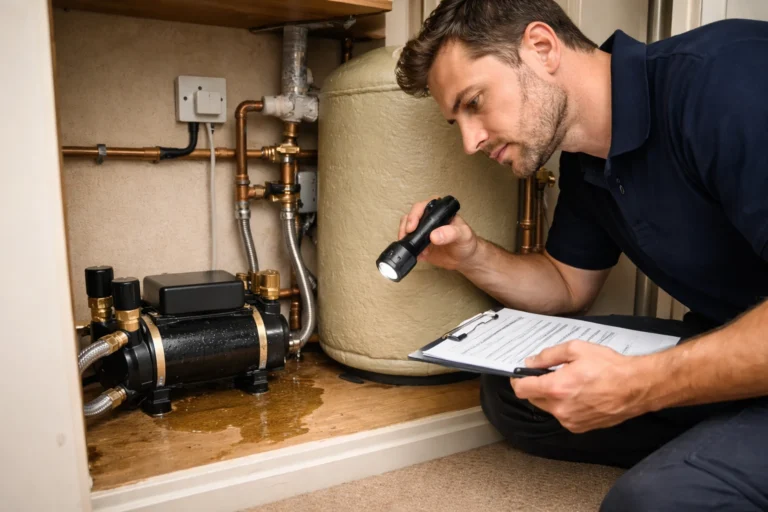
If you’ve noticed water around your shower pump or damp patches in your hot press, it’s a sign something isn’t right. In many Dublin homes, shower pumps sit beside the hot water cylinder, so even a small leak can quickly turn into bigger problems like water damage, electrical risk, or pump failure.
We see this a lot during routine Shower repair Dublin call-outs — what starts as a slow drip often becomes a full breakdown if it’s left too long. The good news is that most leaking shower pump issues can be fixed if they’re caught early.
In this guide, we’ll explain why shower pumps leak, what signs to look out for, and when it’s time to repair or replace the pump.
Common Signs Your Shower Pump Is Leaking
Sometimes the leak is obvious, but other times it’s hidden behind cupboards or inside the hot press. These are the most common warning signs we see in Dublin homes:
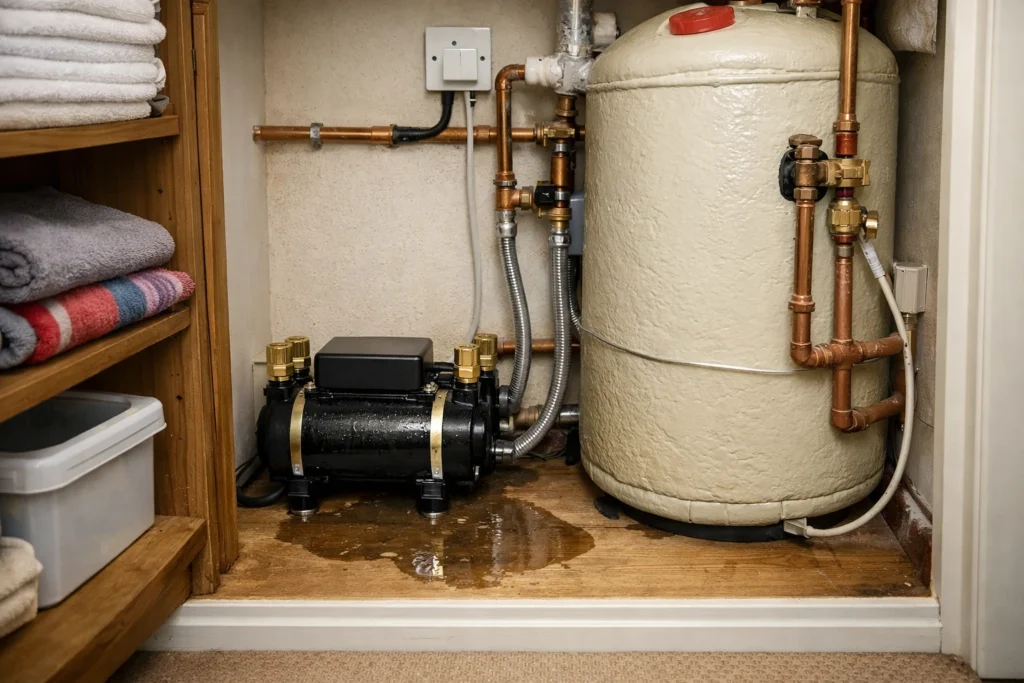
Water pooling under the pump or cylinder
Damp or musty smell in the hot press
Dripping sounds after the shower is turned off
Rust or corrosion on pump casing or pipe joints
Sudden drop in shower pressure
If you spot any of these, it’s important not to ignore them. Water and electrics don’t mix, and a leaking pump can trip your fuse board or damage ceilings below. If water is actively dripping or near wiring, it’s safer to contact an Emergency plumber Dublin service to prevent further damage.
Why Is My Shower Pump Leaking Water? (Most Common Causes)
There are a few main reasons why a shower pump starts leaking, and the exact cause depends on the pump age, brand, and how it was installed.
🔧 Worn Seals or O-Rings
Inside the pump are rubber seals that keep water contained. Over time, heat and constant pressure cause them to harden and crack, leading to slow leaks that usually appear at the bottom of the unit.
🔩 Loose Pipe Connections
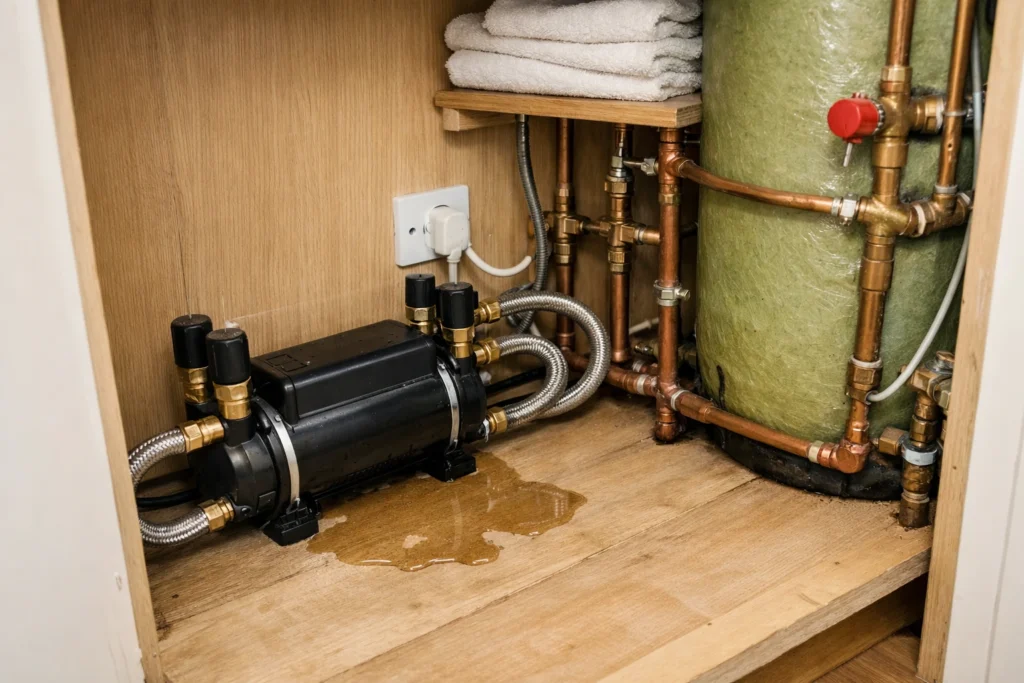
Shower pumps vibrate when running. Over months or years, this vibration can loosen compression fittings, causing water to drip from the pipe joints.
🧱 Corrosion Inside the Pump
If the hot press is damp or poorly ventilated, moisture can cause internal corrosion. This weakens the casing and eventually allows water to escape.
❄️ Cracked Pump Housing
In colder months, freezing pipes or pressure build-up can crack the plastic or metal housing, which often leads to visible water leaking from the bottom of the pump.
⚠️ Installation Issues
Incorrect flange fittings, poor pipe alignment, or unsupported pipework can all put stress on the pump connections and cause early leaks.
In many cases, what starts as a small drip can turn into a bigger internal leak if the pump keeps running under pressure.
Is a Leaking Shower Pump Dangerous?
Yes — a leaking shower pump can become dangerous, especially when it’s installed near electrical connections, which is very common in Irish hot presses.
When water escapes from the pump, it can:
Reach electrical wiring or sockets and increase shock risk
Trip your RCD or fuse board repeatedly
Cause staining or damage to ceilings and floors below
Create damp conditions that lead to mould growth
Even if the pump still seems to work, running it while it’s leaking can make the problem worse and cause permanent damage to the motor. For safety reasons, we always recommend getting the pump checked as soon as you notice water, rather than waiting for it to fail completely.
Power Shower Pump Leaking – Is It Different?
With power showers, the pump is usually built inside the shower unit rather than installed separately beside the hot water cylinder. This means leaks are often harder to spot until water starts appearing through the casing or behind the shower wall.
Common causes of a power shower pump leaking include:
Internal seal failure
Cracked internal pipework
Worn pressure valves
Limescale buildup affecting internal components
Because the pump is part of the shower unit, repairs can be more limited compared to external shower pumps. In many cases, replacing the full power shower unit is safer and more cost-effective than attempting internal pump repairs, especially on older models.
If you notice damp patches around the shower unit or water dripping from the casing, it’s best to stop using it and get it inspected before further damage occurs behind the wall.
🔧 Salamander Shower Pump Leaking – Common Brand Issues
Salamander is one of the most common shower pump brands we work with in Dublin homes, and while they’re generally reliable, leaks can still happen over time.
Some typical reasons for a Salamander shower pump leaking include:
Seal wear after years of regular use
Loose inlet or outlet connections due to vibration
Incorrectly fitted hoses or isolation valves
Internal corrosion on older pumps
The good news is that in some cases, seal kits or minor repairs can fix the issue without needing a full replacement. However, if water is leaking from inside the pump body itself, replacement is usually the safest long-term option.
We always check whether a repair makes sense first, but we’ll also be honest if replacing the pump will save you money and future hassle.
Can You Fix a Leaking Shower Pump Yourself?
It depends on where the leak is coming from and how comfortable you are working around water and electrics.
In some cases, you might be able to:
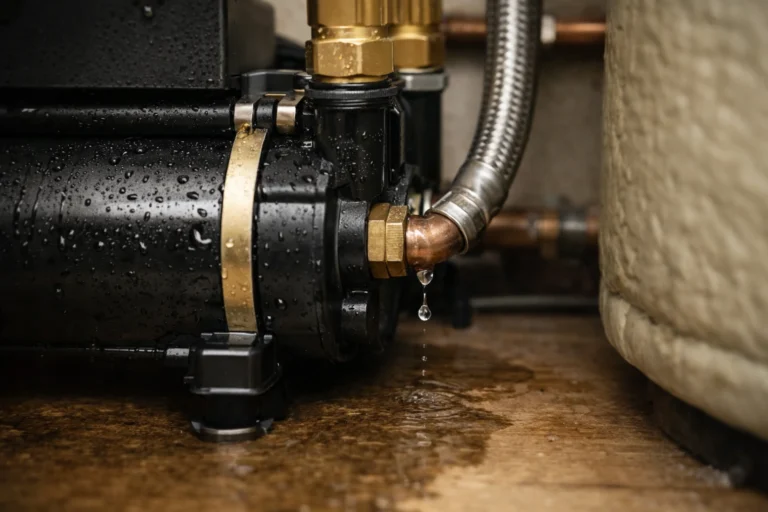
Gently tighten loose pipe fittings
Dry the area and monitor for small surface drips
Check that flexible hoses are properly seated
However, you should not attempt to:
Open the pump casing
Replace internal seals without proper tools
Keep running the pump while it’s leaking
Work on electrical connections if water is present
If the leak is coming from inside the pump or near wiring, DIY repairs can be unsafe and may cause more damage. We often see pumps that could have been repaired early, but ended up needing full replacement because they were left leaking for too long.
When Does a Leaking Shower Pump Need Replacement?
Not every leaking pump needs to be replaced, but there are clear situations where replacement is the better and safer option.
Replacement is usually recommended if:
Water is coming from inside the pump body
The same leak keeps returning after repairs
The pump is over 7–10 years old
The pump is also noisy or overheating
Electrical components have been exposed to moisture
At this point, continuing to repair an ageing pump often costs more in the long run. Installing a new, energy-efficient model also improves water pressure and reduces the chance of future breakdowns.
This is where many homeowners choose to upgrade rather than keep paying for repeat call-outs.
How We Fix Leaking Shower Pumps Across Dublin
When we’re called out for a leaking shower pump, our first step is always to find the exact source of the leak — not just treat the symptom.
Our repair process usually includes:
Full inspection of pump, fittings, and nearby pipework
Pressure testing to check for hidden leaks
Checking electrical safety around the pump area
Honest advice on whether repair or replacement is best
We work with all major brands, including Salamander, Stuart Turner, Grundfos, and integrated power shower systems. In many cases, we can carry out repairs on the same visit, and if replacement is needed, we’ll recommend the most suitable pump for your home and water system.
Our goal is always to fix the problem properly so you don’t have to deal with the same issue again a few months later.
Frequently Asked Questions About Leaking Shower Pumps
A shower pump usually leaks from the bottom when internal seals wear out, pipe fittings loosen, or corrosion develops inside the unit. In many cases, water escapes through drainage holes designed to protect the motor. If you see water under the pump, it should be checked quickly to avoid electrical damage.
Most shower pumps last between 7 and 10 years, depending on how often they’re used and how well they were installed. Pumps in damp hot presses or with poor pipe support may fail sooner. Regular noise, leaks, or pressure drops are signs the pump may be reaching the end of its life.
In most cases, you need a qualified plumber, as shower pump problems are usually caused by pipework, seals, or water pressure issues. However, if water has reached electrical parts or the pump keeps tripping the fuse board, an electrician may also be required for safety checks.
Yes, sometimes. If the leak is caused by loose fittings or worn seals, the pump can often be repaired. But if water is coming from inside the pump body or corrosion is present, replacement is usually the safest and most reliable option.
Even small leaks can become serious if left untreated. Water near electrical components increases the risk of shock, and ongoing leaks can damage ceilings, floors, and surrounding pipework. A leaking pump should always be inspected sooner rather than later to prevent bigger repair costs.
Sealants and leak-stop products are not recommended for shower pumps. They may temporarily slow a leak, but they don’t fix the underlying problem and can make proper repairs more difficult later. Shower pumps need mechanical repairs, not chemical sealers.
Early warning signs include:
Unusual noise or vibration
Drops in water pressure
Leaks around the pump or fittings
Pump running but no water flow
Pump cutting out during use
If these symptoms appear together, the pump may be close to failing and should be checked.
📞 Need Help With a Leaking Shower Pump in Dublin?
If you’ve noticed water under your shower pump, damp patches in the hot press, or a drop in water pressure, it’s best to get it checked before it turns into a bigger and more expensive problem.
We provide fast, reliable shower pump repairs and replacements across Dublin, and we work with all major brands, including Salamander, Stuart Turner, and Grundfos. Whether your pump needs a simple repair or a full replacement, we’ll give you clear advice and fix the problem properly.
 Book your shower pump repair in Dublin today and get your shower back to full pressure safely and quickly.
If the leak is near electrical connections or causing water damage, don’t wait — contact us for urgent assistance and we’ll arrange a fast call-out.