
Can You Run Multiple Showers on One Shower Pump Without Losing Pressure?
Yes, one shower pump can run multiple showers if the pump is correctly sized and the plumbing system is designed to handle the required water flow and pressure.
The most important factor is the pump’s flow rate (litres per minute). Homes with two bathrooms or multiple shower outlets often require a higher-capacity twin impeller shower pump and correctly sized pipework to maintain stable water pressure.
Gravity-fed systems are usually the most suitable setup for this type of installation. If the pump is too small or the plumbing layout is restrictive, pressure can drop noticeably when more than one shower is running.
In many Dublin homes, we also see issues caused by undersized pipework, limited cold water storage, or older hot water cylinders that cannot keep up with demand across multiple bathrooms.
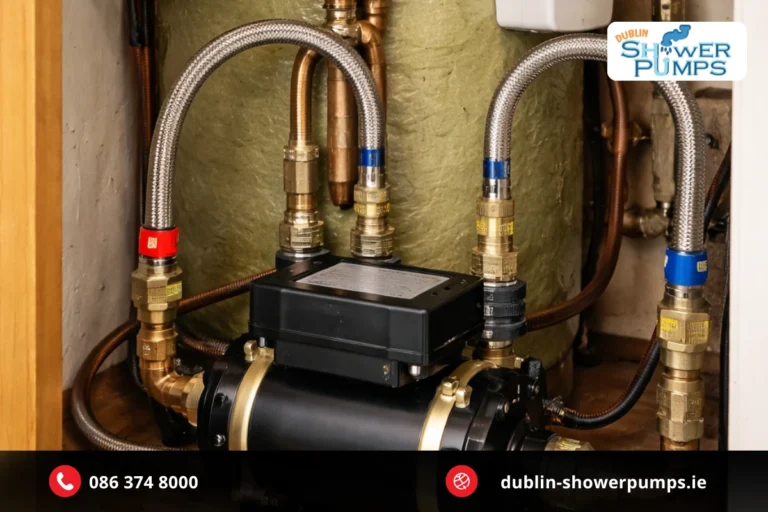
When Can One Shower Pump Supply Multiple Showers?
A single shower pump can supply two showers if the system is designed properly from the start.
This usually works in Irish homes that have:
A gravity-fed system (cold water tank in the attic and hot water cylinder in the hot press)
Adequate pipe diameter feeding both showers
A correctly sized twin impeller pump
Balanced hot and cold water supply
In this setup, the pump boosts both hot and cold feeds evenly, allowing two outlets to operate without severe pressure loss.
However, this does not apply to combi boiler systems. Combi boilers are mains-fed and typically do not use shower pumps. Installing a pump on a combi system can cause serious plumbing issues.
What Happens If the Pump Is Undersized?
If a shower pump is too small for the demand, problems usually appear when two showers are turned on at the same time.
Common issues include:
Noticeable drop in water pressure
Temperature fluctuations
Increased pump noise or vibration
Pump overheating
Shortened pump lifespan
An undersized pump works harder than it should, which can lead to premature failure. In some cases, homeowners assume there’s a plumbing fault when the real issue is simply incorrect pump selection.
Choosing the right pump capacity is critical when supplying multiple bathrooms.
How to Choose the Right Shower Pump for Two Bathrooms
When supplying more than one shower, pump selection becomes critical. The most important factor is flow rate, usually measured in litres per minute (LPM). The higher the combined demand from both showers, the higher the required pump capacity.
You should also consider:
Pipe diameter (15mm vs 22mm feeds)
Distance from cylinder to bathrooms
Vertical head height
Manufacturer performance charts
As a general guide, a standard 1.5 bar pump may be insufficient for two simultaneous showers. Many homes require a 2.0 or 3.0 bar twin impeller pump to maintain consistent performance.
Always check manufacturer specifications rather than relying on guesswork.
Do You Need a Twin Impeller Shower Pump?
In most cases, yes.
A twin impeller shower pump boosts both the hot and cold water supplies equally. This keeps pressure balanced and prevents temperature fluctuations when two outlets are in use.
A single impeller pump only boosts one supply (usually hot water). This can cause uneven pressure, unstable temperatures, and poor shower performance when demand increases.
For two bathrooms running at the same time, a twin impeller model is typically the safest and most reliable option.
Can Two Showers Run at the Same Time?
Yes — but only if the system is designed correctly.
Even with a properly sized pump, performance will depend on:
The hot water cylinder’s recovery rate
The size of the cold water storage tank
Overall household water demand
In a typical Irish semi-detached home with a properly sized gravity-fed system, two showers can operate at the same time with minimal pressure drop — provided the pump and pipework are suitable.
If the system is borderline, you may notice slight pressure reduction when both showers are running. This is often a sign that a higher capacity pump or pipe upgrade may be required.
Common Mistakes When Connecting Multiple Showers
Connecting two showers to one pump without proper planning can cause long-term performance issues.
Common mistakes include:
Using an undersized pump for total demand
Tapping into mains pressure incorrectly
Installing a single impeller pump instead of twin
Ignoring pipe diameter restrictions
Overlooking the hot water cylinder’s capacity
Another frequent issue is assuming that if one shower works well, two will perform the same. In reality, water demand doubles — and so must the system capacity.
Professional sizing and proper pipe layout prevent pressure drops, excessive noise, and premature pump failure.
When Should You Install a Separate Shower Pump?
In some homes, one pump simply isn’t enough.
You may need a separate pump if:
The property has three or more bathrooms
Multiple showers are regularly used at peak times
There is significant distance between bathrooms
The hot water cylinder is large but pipework is restricted
You want maximum performance with no pressure compromise
Larger homes or attic conversions often require a more advanced setup. Installing a second pump or upgrading the system may provide better long-term reliability.
Need Advice on Shower Pump Installation in Dublin?
If you’re unsure whether one pump can handle multiple showers in your home, it’s best to have the system assessed properly. Pump sizing depends on flow rate, pipework, and the type of water system installed.
Our Shower Pump Installation Dublin team can inspect your setup, calculate the correct pump capacity, and recommend the most suitable option for reliable performance.
Getting the right pump the first time prevents pressure problems, noise issues, and unnecessary upgrades later.
Frequently Asked Questions About Running Multiple Showers on One Pump
Yes, you can run two showers off one pump if the pump is correctly sized and the plumbing system supports the demand. A twin impeller pump with sufficient flow rate is usually required to maintain balanced hot and cold pressure.
For two showers, you typically need a twin impeller shower pump with adequate bar pressure (often 2.0–3.0 bar depending on demand). The correct choice depends on pipe size, distance, and the home’s gravity-fed system.
Yes, two showers can run at the same time if the pump capacity, cylinder size, and pipework are properly designed. If the pump is undersized, you may experience pressure drop or temperature fluctuation.
For multiple showers, a double (twin impeller) shower pump is normally required. It boosts both hot and cold supplies equally, preventing imbalance and maintaining consistent pressure.
Yes, a shower pump increases water pressure in gravity-fed systems by boosting both hot and cold water feeds. However, it does not apply to mains-fed combi boiler systems.
To improve pressure for multiple shower heads, you may need a higher capacity twin impeller pump, larger pipework, or system upgrades. Proper pump sizing is essential to avoid performance loss.