
Shower Pump Low Pressure or No Pressure?
Shower pump running but the water pressure is still weak? Low or no shower pressure can be caused by an airlock, blocked filters, low water supply from the attic tank, incorrect pump type or a fault inside the pump. In Dublin homes with gravity-fed systems, the problem isn’t always the pump itself.
Shower Pump No Pressure – What It Usually Means
If your shower pump no pressure issue has appeared suddenly, you’re not alone. We get calls like this every week across Dublin. In most cases, the pump motor is still running — but the water flow isn’t increasing the way it should.
When a shower pump has no pressure, it usually means one of three things: there’s air trapped in the system, the inlet filter is blocked, or the pump isn’t receiving enough water from a gravity-fed tank. Less commonly, it can point to internal wear inside the pump itself.
Before assuming the pump has failed, it’s important to check the basics. In many Dublin homes with attic tanks and hot presses, small changes in water level or pipework can stop the pump from boosting properly.
If your pump is also shutting down unexpectedly, you may want to read our guide on shower pump keeps cutting out for related causes.
The good news? Most shower pump no pressure problems are fixable without replacing the whole unit.
Why Does a Shower Pump Have No Pressure?
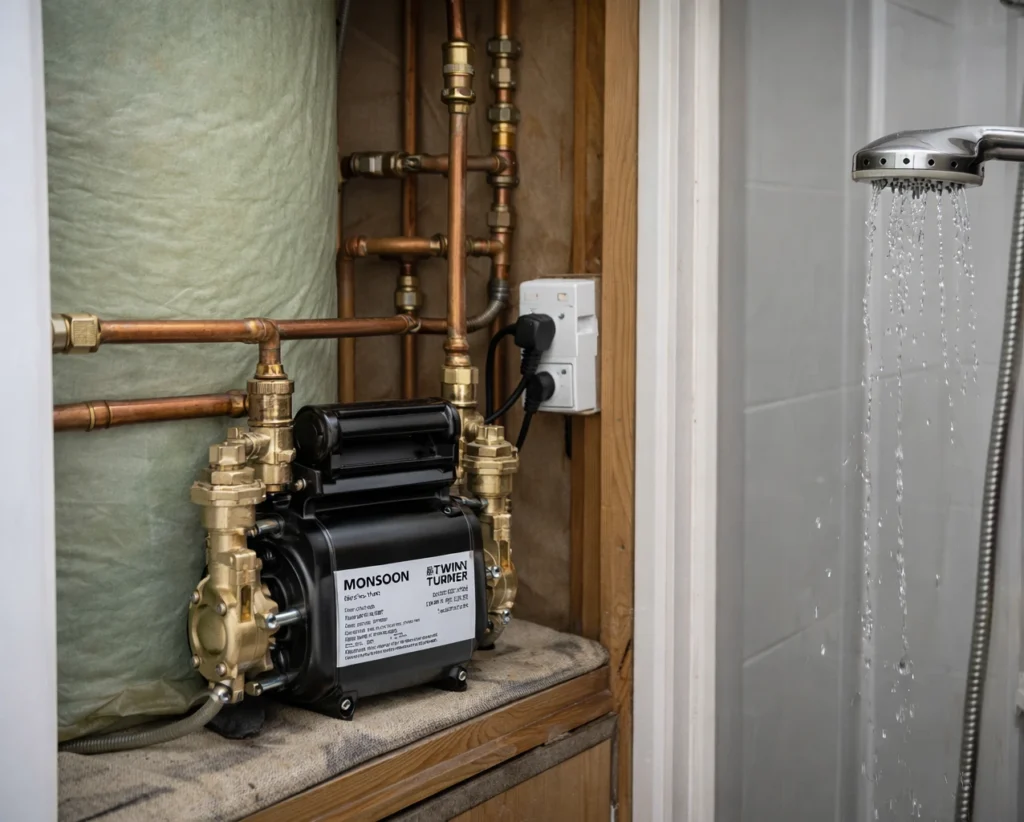
When we investigate a shower pump no pressure complaint, we work through the most common causes first. The goal is always simple: identify whether the problem is with the pump itself or the water supply feeding it.
1. Airlock in the Pump or Pipework
Airlocks are very common in Irish gravity-fed systems. If the hot water cylinder runs low or the attic tank empties temporarily, air can enter the pipework.
You’ll often notice:
The pump running loudly
Very little or no water pressure
Intermittent boosting
This is sometimes described as “shower pump running but no pressure.” In many cases, we can clear an airlock without replacing any parts.
If you’ve also noticed strange noises when the shower isn’t being used, our article on shower pump making noise when not in use explains how air and pressure imbalance can cause that too.
2. Blocked Inlet Filter
Most pumps have small mesh filters on the inlet side. Over time, debris from the attic tank — especially in older Dublin homes — can clog these filters.
When that happens:
Flow rate drops
Pressure feels weak
The pump struggles to boost
This often leads homeowners to think the pump has failed, when in reality it just needs cleaning.
3. Gravity Fed Shower Pump Problems
Many properties in Dublin rely on gravity-fed systems. These systems require sufficient vertical drop (head height) between the attic tank and the pump.
If:
The pump type is incorrect (positive vs negative head)
The pipework layout is poor
The water level in the tank is too low
You may experience weak shower pressure with pump even though the motor works fine.
Correct pump sizing and proper installation are critical here. An incorrectly specified pump can never boost properly, no matter how many times it’s reset.
Weak Shower Pressure With Pump – Is It the Pump or the System?
Not every shower pump no pressure issue is actually the pump’s fault.
Before we recommend repair or replacement, we check the wider system.
Sometimes the real cause is:
A blocked or limescale-covered shower head
A partially closed isolation valve
Low water level in the attic tank
Hot water cylinder supply restriction
Low overall mains pressure (if hybrid system)
We’ve seen many cases where a homeowner replaced a pump unnecessarily when the issue was a simple flow restriction elsewhere.
A quick way to tell:
If the pump sounds normal but the water trickles, the issue is usually supply-related.
If the pump struggles, vibrates heavily, or fails to trigger consistently, the problem may be internal.
Either way, identifying the difference early prevents unnecessary expense and protects your plumbing system.
Step-by-Step: What You Can Check Before Calling Us
If you’re dealing with a shower pump no pressure issue, there are a few safe checks you can do before booking a visit.
We always encourage simple checks first — as long as you’re not interfering with electrics or dismantling the pump.
1. Check the Attic Tank Water Level
In most Dublin homes, shower pumps are connected to a gravity-fed attic tank. If the water level is low or the float valve is stuck, the pump may run but not boost properly.
Lift the tank lid carefully and confirm:
There’s enough water inside
The ballcock is working
No obvious blockages
If the tank is nearly empty, the pump simply has nothing to draw from.
2. Inspect Isolation Valves
Check that all isolation valves near the pump are fully open. Sometimes after maintenance work, valves are only partially reopened.
A half-closed valve can easily cause weak shower pressure with pump even though the motor sounds normal.
3. Listen to the Pump
Does it sound smooth and steady?
Or:
Is it vibrating heavily?
Making a grinding noise?
Starting and stopping rapidly?
If the pump runs normally but water flow is poor, it’s usually a supply issue.
If the motor sounds strained, the problem may be internal.
4. Check the Shower Head
It sounds simple — but blocked shower heads are common.
Limescale or debris can restrict flow and make it seem like the pump has no pressure. Remove the head and test the flow directly from the hose.
If pressure improves, the issue isn’t the pump at all.
If none of these checks improve the situation, it’s time to look deeper.
When It’s Time to Call a Professional
Some shower pump no pressure problems require proper testing and tools.
You should call for professional help if:
The pump is running but no pressure improves
You suspect an airlock but can’t clear it
Multiple bathrooms have weak flow
The pump trips electrics
You notice leaks around the pump
Airlocks, filter blockages, and incorrect head pressure are common in Irish gravity-fed systems. Clearing them incorrectly can cause further damage.
If your pump is older (6–10+ years) and struggling repeatedly, it may also be worth considering whether repair or replacement is more cost-effective.
We often diagnose these issues during visits for shower pump installation in Dublin, especially where an older unit was undersized or incorrectly fitted.
What Pump Do I Need for a Low Pressure Shower?
Then briefly explain positive vs negative head and that the correct pump depends on the available natural flow/head and plumbing setup. This could capture a useful commercial-intent variation without turning the article into another installation page.
How We Fix Shower Pump No Pressure
When we attend a callout for shower pump no pressure, we don’t just swap parts. We diagnose the full system.
Here’s how we approach it:
✔ System Flow Check
We test flow rate from both hot and cold feeds to confirm whether the supply is sufficient.
✔ Pump Activation & Electrical Check
We confirm the pressure switch is triggering correctly and that the pump isn’t dry running.
Dry running can damage impellers quickly.
✔ Airlock Removal
If air is trapped in the system, we use controlled methods to purge the air safely without stressing the pump.
This is very common after cylinder drain-down or plumbing work.
✔ Filter Cleaning
We inspect and clean inlet filters where accessible. Blocked filters are one of the most common causes of shower pump no pressure complaints.
✔ Pump Type & Head Height Assessment
Many gravity fed shower pump problems stem from incorrect pump selection.
We confirm:
Positive or negative head suitability
Adequate vertical drop from tank
Correct pipe layout
If the pump is simply wrong for the property, we’ll explain that clearly — no guesswork.
In most Dublin homes, once the root cause is identified, restoring proper pressure is straightforward.
How to Prevent Shower Pump Pressure Problems
Prevention is much cheaper than emergency repairs.
Here’s what we recommend to homeowners:
✔ Keep the Attic Tank Clean
Debris in the tank leads directly to blocked filters and reduced flow.
✔ Avoid Letting the Tank Run Dry
Dry running is one of the quickest ways to damage a pump.
✔ Install Inline Filters
Additional filtration helps protect the pump’s internal components.
✔ Annual Plumbing Check
Even a quick yearly inspection helps spot low flow, imbalance, or valve issues early.
✔ Ensure Correct Pump Sizing
If you’re upgrading bathrooms or adding an extra shower, the existing pump may not be sufficient.
An undersized pump often causes weak shower pressure with pump complaints even though nothing is technically “broken.”
A properly installed and maintained shower pump should deliver consistent, strong pressure for years. If you’re experiencing shower pump no pressure repeatedly, there’s always a reason — and in most cases, it’s something we’ve seen and fixed many times across Dublin homes.
Frequently Asked Questions – Shower Pump No Pressure
If your shower pump is running but no pressure improves, it’s usually caused by an airlock, blocked filters, or low water supply from the attic tank. The motor may work, but restricted flow prevents proper boosting.
An airlock is fixed by safely purging trapped air from the pipework. This often requires controlled flushing of the system to restore continuous water flow.
Sudden pressure loss is commonly caused by an empty tank, blocked inlet filter, air entering the system, or an electrical issue affecting the pump.
The most common cause of shower pump no pressure in Dublin homes is restricted water flow due to airlocks or insufficient gravity feed from the attic tank.
Yes. A plumber can test flow rate, inspect the pump, check valves, and confirm whether the issue is mechanical, electrical, or supply-related.
Signs include weak pressure despite the motor running, loud vibration, repeated cut-outs, or inconsistent water flow.
Still Dealing With Shower Pump No Pressure?
If your shower pump has no pressure and the usual quick checks haven’t worked, don’t ignore it. Running the pump dry or leaving an airlock unresolved can damage the unit and lead to a full replacement.
At Dublin Shower Pumps, we diagnose the real cause first — whether it’s an airlock, blocked filters, low tank feed, or a failing pump. No guesswork, no unnecessary replacements.
✔ Clear fault diagnosis
✔ Honest, fixed pricing
✔ Same-day service available across Dublin
✔ Gravity-fed system specialists
If your shower pressure has suddenly dropped, give us a call and we’ll talk you through it.
📞 Call now: 086 374 8000
📲 Or book online for a quick inspection and fixed quote.
Let’s get your shower pressure back where it should be.