

Where to install shower pump is typically beside the hot water cylinder and close to the cold water storage tank at floor level, allowing gravity to feed water directly into the pump for steady flow and strong pressure. Installing the pump low with short pipe runs reduces airlocks, noise, and pressure loss while improving reliability and lifespan. Proper placement below the tank water line is recommended by plumbing best practice guidelines (Source: UK Water Regulations Advisory Scheme – WRAS).
Where to Install a Shower Pump for the Best Pressure and Performance
If your shower pressure is weak or inconsistent, the problem is often not the pump itself — it’s where the shower pump is installed. Positioning makes a big difference. Even a high-quality pump will struggle if it’s fitted in the wrong place, too far from the water source, or above the tank level.
In most Dublin homes with gravity-fed systems, a shower pump should be installed close to the hot water cylinder and cold water storage tank, usually in the hot press or directly beside it. This allows the pump to receive a steady flow of water and prevents air entering the pipework. When pumps are fitted too far away, too high, or on long pipe runs, you can get noise, vibration, pressure drops, or frequent cut-outs.
We regularly see issues caused simply by poor positioning. Getting the location right from the start saves breakdowns, call-outs, and unnecessary replacements.
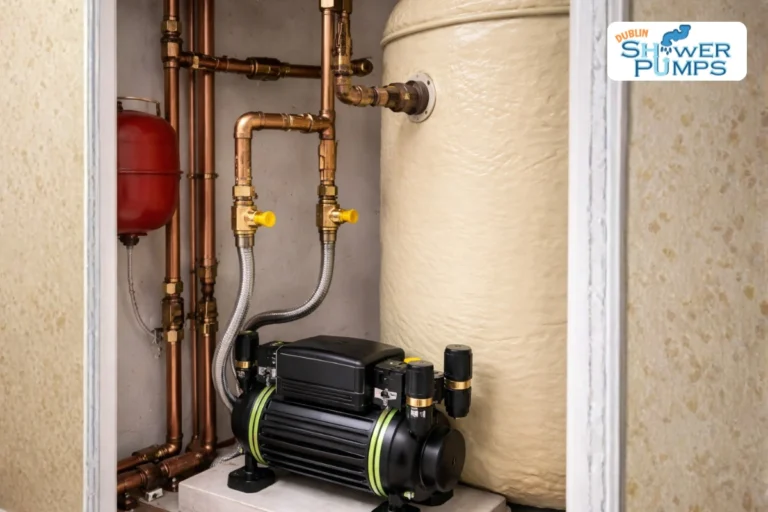
Install the Pump Close to the Cylinder and Water Tank
The golden rule we follow on every installation is simple: keep the pump as low and as close to the water supply as possible.
Shower pumps work best when they can “pull” water naturally from the cylinder and tank. Installing them at floor level inside the hot press or on a solid base beside the cylinder helps maintain constant flow and reduces the chance of airlocks or dry running.
If the pump is installed too high, air can get trapped inside the pipes. This leads to noisy operation, loss of pressure, or the pump switching off completely. If you’ve ever had a pump that hums but doesn’t move water, it’s often an air issue. We covered the fixes in our guide on how to prevent airlocks in shower pump systems.
It’s also important to check that your home actually uses a gravity-fed setup before installing a pump. Pumps aren’t suitable for combi or mains-pressure systems. If you’re unsure, our quick guide on choosing a shower pump for gravity fed system explains how to tell and what works best.
Getting these basics right means quieter operation, stronger pressure, and a pump that lasts for years instead of months.
Best Places to Fit a Shower Pump in Your Home
Once you know the pump should sit close to the cylinder and tank, the next question is where exactly it should go.
In most Irish homes, there are a few practical locations that work really well. The goal is always the same — short pipe runs, solid support, and easy access for maintenance.
Hot press (airing cupboard)
This is usually the best option. The cylinder and pipework are already here, so the pump gets a strong, steady water supply. It also keeps everything tidy and easy to service later.
Utility room or downstairs storage
If space is tight in the hot press, a nearby utility room can work just as well. As long as the pipe runs are short and the pump stays below the tank level, performance will be good.
Under-stairs cupboard
This can be a handy alternative in smaller homes. It keeps noise away from bedrooms and still allows the pump to sit low and stable.
Wherever you install it, the pump should always sit on a solid, level surface, not loose boards or shelves. Using anti-vibration feet or a rubber mat also helps reduce noise travelling through the house.
A well-positioned pump should run quietly in the background. If you can clearly hear it through walls or floors, it’s often a sign the location or mounting isn’t ideal.
Where Not to Install a Shower Pump (Common Mistakes)
We often get called out to fix pumps that are perfectly fine — they’re just installed in the wrong place.
Unfortunately, poor positioning creates what people think are “pump faults”, when really it’s an installation issue.
Here are the most common mistakes we see.
In the attic or loft
This is probably the biggest one. Pumps installed too high struggle to draw water properly and are much more likely to suffer from airlocks or pressure problems. They also get very cold in winter and can be harder to access for repairs.
Too far from the cylinder
Long pipe runs reduce pressure and make the pump work harder than it should. The result is weaker showers and a shorter pump lifespan.
On wooden floors or loose boards
This causes vibration and noise. Homeowners often complain that the pump sounds like it’s shaking the house. A solid base makes a huge difference.
In tight, unventilated spaces
Pumps generate heat. If they’re boxed in with no airflow, they can overheat and cut out.
Near bedrooms or living areas
Even quiet pumps make some sound. Installing them directly under a bedroom floor often leads to complaints later.
Avoiding these mistakes from the start saves a lot of frustration. Most pressure and noise problems come down to placement, not the pump itself.
Signs Your Shower Pump Is Installed in the Wrong Place
A lot of people assume their pump is faulty when something feels off.
But in many homes we visit, the pump itself is perfectly fine — it’s just installed in the wrong location.
Poor positioning creates symptoms that look like breakdowns.
If you notice any of the following, the issue may be placement rather than the pump:
Losing pressure over time
If your shower starts strong but quickly weakens, the pump may be too far from the tank or struggling to pull water properly.
Loud vibration or humming
A pump that sounds like it’s shaking the floor is usually mounted on loose boards or hollow spaces instead of a solid base.
Cutting out or stopping mid-shower
This often happens when air gets into the system or the pump overheats due to poor ventilation.
Spurts of air or uneven water flow
Air trapped in the pipes can cause spluttering taps and inconsistent pressure.
Pump running but little water coming through
This is a classic sign that the pump isn’t getting a steady water supply from the tank.
We see these problems all the time, and many are solved simply by moving the pump a short distance to a better location. It’s surprising how much difference proper placement can make to both performance and noise.
Should You Install a Shower Pump Yourself or Call a Professional?
It’s tempting to treat a shower pump like any other DIY job.
On paper, it looks straightforward — connect a few pipes, wire it up, and switch it on.
But in reality, small mistakes during installation can cause ongoing problems for years.
Things like:
incorrect pipe sizes
missing non-return valves
poor positioning
loose fittings
weak electrical connections
no anti-vibration mounting
These don’t always show up straight away. The pump might seem fine for a few weeks, then start losing pressure or making noise.
We often get called out to “fix a broken pump” that was only installed recently, when really it just needs to be repositioned or reinstalled correctly.
A professional installation means:
the pump is placed in the best location
pipework is balanced properly
noise is reduced
airlocks are avoided
everything runs safely and reliably
For most homeowners, getting it done right the first time saves money and hassle in the long run.
Shower Pump Placement Checklist (Quick Guide Before You Install)
If you’re planning a new pump or moving an existing one, it helps to keep things simple.
Before installing, run through this quick checklist. It covers the basics we follow on most homes across Dublin.
Your shower pump should be:
✔ Close to the hot water cylinder
✔ Near the cold water storage tank
✔ Installed below the tank water level
✔ On a solid, flat surface (not loose floorboards)
✔ Mounted with anti-vibration feet or a rubber base
✔ Easy to access for future servicing
✔ In a dry, ventilated space
✔ Away from bedrooms where noise could travel
If even one of these isn’t right, you may notice weaker pressure, extra noise, or ongoing problems later.
Good placement isn’t complicated — it’s just about keeping pipe runs short, the pump low, and everything stable.
Getting these few details right makes a big difference to how the shower feels every day.
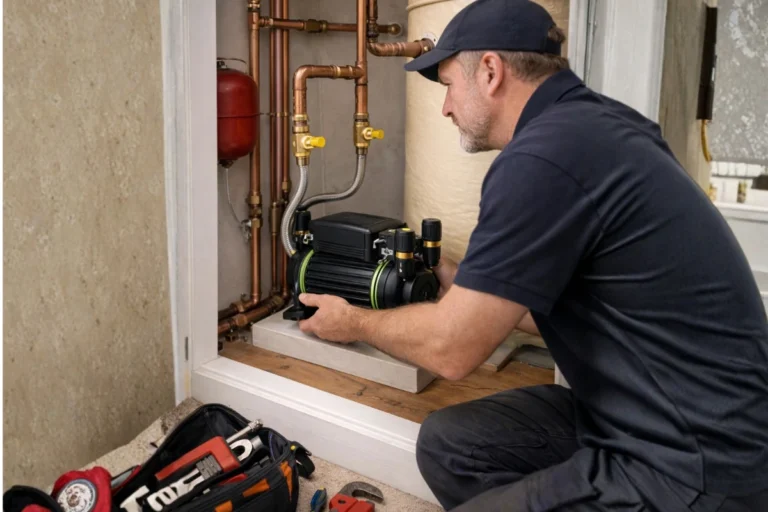
Final Thoughts – Getting the Best Performance from Your Shower Pump
Most shower pump problems aren’t caused by the pump itself.
They come down to where it’s fitted.
We’ve seen brand new pumps struggle simply because they were placed too high, too far away, or mounted poorly. And we’ve also seen older pumps run perfectly for years just because they were installed in the right spot from day one.
So if you’re wondering where to install shower pump systems for the best results, the answer is simple: keep it low, close to the cylinder, and securely mounted.
A little planning at the start saves a lot of noise, pressure issues, and future repairs.
And if you’re ever unsure, it’s always better to ask for advice than risk installing it twice. We’re always happy to help homeowners across Dublin get strong, reliable shower pressure without the headaches.
Frequently Asked Questions About Shower Pump Installation
The best place is beside the hot water cylinder and cold water tank, usually in the hot press or airing cupboard. The pump should sit low, close to the water source, and below the tank level. Short pipe runs improve flow, reduce noise, and prevent airlocks, giving stronger and more reliable pressure.
Ideally, keep the pump within a few metres of the cylinder and tank rather than the shower itself. Long pipe runs reduce pressure and make the pump work harder. The closer the pump is to the water supply, the better the performance and lifespan.
Water pumps should be installed on a solid, level surface near the water source, not in lofts or high positions. Floor level in a hot press or utility room works best. This helps maintain steady flow, reduces vibration, and prevents air entering the system.
No, it’s not recommended. Installing a pump above the cylinder or tank can cause airlocks and poor suction. Pumps work best when gravity feeds water into them. Keeping the pump below the water level ensures smooth and consistent pressure.
Common mistakes include placing the pump in the attic, using long pipe runs, mounting on loose floorboards, poor ventilation, or fitting the wrong pump type. These issues cause noise, weak pressure, and frequent breakdowns. Correct placement and setup avoid most problems.
In Dublin, shower pump installation typically costs €250–€500 for labour, depending on pipework changes and access. The pump itself is extra. Complex installations or upgrades may cost more. Getting it installed properly saves money on future repairs.
Most gravity-fed homes use a positive head pump, which requires natural water flow from the tank. If your outlets are level with or above the tank, a negative head pump may be needed. A quick check of your system setup will confirm the right type.
Yes. Longer pipe runs reduce pressure and increase strain on the pump. Keeping the pump close to the cylinder and tank improves efficiency and reduces noise. Short, direct pipework always gives better results than long routes around the house.
Domestic shower pumps are not designed to lift water high vertically. They boost pressure, not suction. That’s why they should be installed below the tank water level. Trying to lift water too far upward often leads to poor flow and air problems.